 Deutschland
 English
 Nederlands
 Schweiz DE
 Nederlands Belgie
 Dansk
Dansk Norwegian
 Finnish
 Español
 Italiano
 Polski
 Türkçe
Interior
Discover the highlights
Tap on the dots to see what the NEXT 380 has to offer.




Technical Specifications Overview
Information on caravan weights and weight-related specifications (NEXT)
When selecting and configuring your caravan, it is essential to bear in mind that every caravan is designed by the manufacturer for a maximum permissible gross weight only, which must not be exceeded whilst driving. The applicable legal provisions regarding caravan weights, which we have summarised for you below, are set out in Commission Implementing Regulation (EU) 2021/535 of 31 March 2021, which applies uniformly across the European Union. Please read the following information carefully before selecting and configuring your caravan. If you have any questions, please feel free to contact your NEXT dealer.
1. The technically permissible maximum mass
The ‘technically permissible gross weight’ refers to the maximum weight, as specified by the manufacturer, that your caravan may have whilst being towed in a laden condition. Please bear in mind that exceeding the technically permissible gross weight whilst driving can pose a safety risk and is punishable by fines in many European countries. We therefore recommend that you weigh your caravan before every journey and ensure that the technically permissible gross weight is not exceeded. You can find the technically permissible gross weight specified by the manufacturer for each layout in the technical specifications.
2. The mass in running order
The ‘mass in running order’ refers to the weight of the empty caravan as specified by the manufacturer as standard, which includes the following items:
- the caravan’s standard equipment as specified by the manufacturer,
- the mass of the bodywork and the coupling device,
- the fresh water tank filled to 100 per cent capacity (25 l),
- the toilet flush tank, filled to 100 per cent capacity,
- a steel gas cylinder filled to 100 per cent with a weight of 12 kg (filled to 5 kg).
The mass in running order is also specified in the technical data for each layout.
Please note, however, that these are calculated values derived from the type-approval procedure, which are subject to legally permissible tolerances of up to ± 5 per cent; these tolerances, in turn, may have a direct impact on the remaining payload and load capacity of the specified caravan (see also section 4).
Example:
| Mass in running order according to technical data | 805 kg |
| Legally permissible tolerance of ± 5 % | ± 40 kg |
| Legally permissible range of mass in running order | 764 – 845 kg |
The legally permissible range of mass in running order is also specified in the technical data.
As the legally permissible tolerances can affect the remaining payload and the load capacity of the individual caravan, you should take these tolerances into account when configuring your caravan.
Example:
If, for the caravan in the example above, the legally permissible tolerances of +1 per cent apply to the kerb weight, this increases from 805 kg to 813 kg, thereby reducing the caravan’s payload and remaining load capacity by 8 kg.
3. The actual mass of the caravan and standard/optional equipment
The ‘actual mass’ of the caravan comprises the mass in running order and the optional equipment fitted at the factory.
‘Standard equipment’ describes the basic configuration of a vehicle, including all features required by law. This also includes all equipment fitted as standard. Detailed information on the standard equipment for each layout can be found in the configurator.
‘Optional equipment’ comprises all items of equipment that are not part of the standard equipment and are fitted to the caravan ex-works under the manufacturer’s responsibility. However, accessories fitted by you or a dealer after the caravan has been delivered from the factory are not considered optional extras. You can also find details of optional extras available to order ex-works in the configurator.
It is important to note that the installation of optional extras always results in a reduction in the caravan’s payload and load capacity (see also point 4). You can find the maximum weight of optional extras that can be ordered ex-works for each caravan and floor plan in the technical specifications (see also point 5).
4. The (minimum) payload and the load capacity
The ‘payload’ of a caravan is calculated by subtracting the mass in running order and the mass of the optional extras from the technically permissible gross mass. For caravans, the payload generally corresponds to the ‘remaining payload capacity’.
Example:
| Technically permissible gross weight | 1,000 kg |
| Mass in running order according to technical data | 805 kg |
| Mass of selected optional equipment | 0 kg |
| Remaining payload | 195 kg |
Please note, however, that the payload – and therefore also the remaining load capacity – may be reduced accordingly due to legally permissible tolerances in the mass in running order of up to +5% (see also point 2).
European legislation stipulates a fixed ‘minimum payload’ for caravans for luggage and other items that are not part of the factory-fitted optional extras. This is intended to ensure that you can transport your personal luggage, such as clothing, toiletries and kitchenware, food, camping equipment or toys, without exceeding the technically permissible gross vehicle mass when fully laden.
For caravans, this minimum payload is calculated as follows:
Minimum payload in kg ≥ 10*(n + L)
n = maximum number of berths and
L = body length of the vehicle in metres.
Example:
For a caravan with 3 sleeping berths and a body length of 4.60 m, the minimum payload is 76 kg (10*[3+4.60]).
You can find details of the number of sleeping berths for each layout in the technical specifications.
Please note that the legally prescribed minimum payload must not be undercut when configuring your caravan. If the actual vehicle mass increases as a result of selecting optional extras to such an extent that there is no longer sufficient margin between the actual vehicle mass and the technically permissible gross vehicle mass to accommodate the legally required minimum payload, you must either increase the vehicle’s payload or deselect optional extras in order to continue with the configuration and ordering process.
Ensure that the technically permissible gross vehicle mass is not exceeded, even in theory, by checking with your NEXT dealer if necessary.
5. The maximum mass for optional extras
To ensure that the technically permissible gross vehicle mass of our caravans is not exceeded by the installation of optional extras, taking into account the mass in running order and the statutory minimum payload, we have set a limit on the installation of optional extras at the manufacturer’s end and defined a ‘maximum mass for optional extras’.
This maximum mass for optional equipment is calculated by subtracting the mass in running order and the minimum payload from the technically permissible gross mass.
As the mass in running order, being a calculated value, is subject to legally permissible tolerances of up to ± 5 per cent, and the occurrence of these tolerances may result in the actual payload falling below the minimum permitted level, we include the legally permissible tolerances in the maximum mass for optional equipment as a precautionary measure. We also take into account specific equipment features of country-specific variants and special models that are not part of the standard equipment.
The maximum mass for optional equipment is specified for each floor plan in the technical data.
Example:
| Technically permissible gross vehicle mass | 1,000 kg |
| Mass in running order according to technical specifications | 805 kg |
| Statutory tolerance of +5% | + 40 kg |
| Mass in running order, taking into account the legally permissible tolerance | 845 kg |
| Minimum payload | 76 kg |
| Maximum mass for optional equipment | 79 kg |
| Total remaining payload | 155 kg |
Technical details
Dimensions
Weight
*Calculated on the basis of ‘mass in running order (+5%)’
Sleep
Further details
Key to symbols
1. The masses in running order were determined in accordance with Regulation (EU) 2021/535, taking into account the caravan’s standard equipment as specified by the manufacturer, the fresh water tank filled to 100 per cent (25 litres), the toilet flush tank filled to 100 per cent, and a steel gas cylinder filled to 100 per cent with a weight of 12 kg and a fill quantity of 5 kg. This is a calculated value subject to legally permissible tolerances of up to +/- 5% (see note in brackets). As the application of legally permissible tolerances has a direct impact on the remaining payload, these tolerances must be taken into account when configuring the vehicle.
2. The maximum mass for optional equipment is a value calculated for each floor plan, which limits the mass of the optional equipment that can be ordered ex-works. This is intended to ensure that the legally prescribed ‘minimum payload’ is maintained. The maximum mass for optional equipment has been calculated on the basis of the ‘mass in running order (+5%)’.
3. The manufacturer is permitted to specify alternative tyre sizes
4. The technically permissible gross vehicle mass when laden is the total mass specified by the manufacturer, which must not be exceeded under any circumstances whilst the vehicle is in motion
5. The rolling diameter is identical for all weight variants.
6. The payload, and consequently the remaining load capacity, may be reduced accordingly due to legally permissible tolerances in the mass in running order of up to +5%.
7. Dimensions: 430 x 150 x 240 mm
8. Dimensions of felt basket: 300 x 180 x 180 mm; dimensions of cushion: 300 x 600 mm
Important notes
- The product information and price list reflect the standard specification at the time of printing. Although the content has been checked, printing errors cannot be ruled out. We reserve the right to make changes to the specification and product improvements during the model year. Colour differences due to printing and photographic processes cannot be entirely ruled out.
- Some of the models shown in the product information and price list feature optional extras or decorative elements that are not included as standard.
- Due to the use of natural materials, deviations of up to +/- 5% are possible for all dimensions and weights. Fitting accessories increases the kerb weight. Add-ons to the vehicle may affect the drawbar load. All dimensions are indicative and may be subject to minor changes.
- Information on masses and weights is provided in accordance with Regulation (EU) 2021/535, unless otherwise stated in the catalogue, including technical data and the price list.
- Please note: Axle and drawbar loads, as well as compliance with the technically permissible gross vehicle mass, must be observed. The load must be distributed within the vehicle to ensure compliance with the permissible masses and loads.
- The technically permissible gross vehicle mass when laden must not be exceeded under any circumstances. Please consult your Fendt-Caravan specialist dealer if necessary.
- Fittings may affect the payload by increasing or decreasing the vehicle’s unladen weight. Please note that, depending on the fittings, this may reduce the payload.
- Selecting an awning based solely on this outer dimension may not be sufficient in some circumstances. The specified outer dimension applies only to awnings that are fully retracted into the caravan’s existing awning rail. The perimeter measurement may vary due to optional extras, tyre size and load. To determine an exact perimeter measurement that matches the awning design, we recommend that you measure your caravan individually
- The side walls of caravans, just like the front and rear walls and roof structures, are almost exclusively manufactured using the so-called full sandwich construction method. The advantages of this sandwich construction are good thermal insulation, low weight and high stability. Unfortunately, however, the use of different materials – such as wood, PU strips, insulation material, GRP or aluminium sheet – and the associated varying degrees of thermal expansion of these materials can lead to dimensional tolerances. The extent of these variations differs depending on the weather and the time of year. Particularly during the transitional periods from summer to the cooler autumn, or between warm days and cool nights, these variations can be far more noticeable than might be the case under consistently stable temperatures. The GRP or aluminium sheet expands in the heat and contracts in the cold. The materials underneath – the insulation, the timber and the PU strips – do the same, though not to the same extent nor at the same rate. From a physical point of view, this is a completely normal process. With textured sheets, these effects are not as noticeable as with smooth sheets, as the uneven surface (textured finish, hammered finish) reduces reflections. However, even here, production-related tolerances and any associated marks or visual irregularities are unavoidable. When carrying out repairs to caravan bodies, the tolerances that may arise from the combination of these different materials are just as unavoidable as they are during the production of the vehicles themselves. The manufacturer’s quality standard should also serve as the benchmark for assessing the quality of the repair. There are currently no generally recognised specifications regarding tolerances and testing procedures. In conclusion, it should be noted that waviness, markings or visual irregularities are unavoidable both on new vehicles and following repairs, but these do not impair the vehicle’s stability, functionality or watertightness.
- The manufacturer provides a 6-year warranty on the watertightness and structural joints of the caravan in accordance with the warranty terms and conditions. To this end, the vehicle must be presented to an authorised caravan dealer every 12 months. Watertightness checks must be carried out every 12 months and are subject to a charge.
- With the publication of this price list, all previous price lists cease to be valid. The prices are recommended retail prices ex works Mertingen, inclusive of statutory VAT.
- We reserve the right to make changes to prices, design and equipment.
- The prices quoted apply only to standard production models. The retrofitting of certain optional extras may not be possible in some cases or may incur significant additional costs.
NEXT Price List for the 2026 season, as at 26 February 2025
NEXT is a brand of FENDT-Caravan GmbH
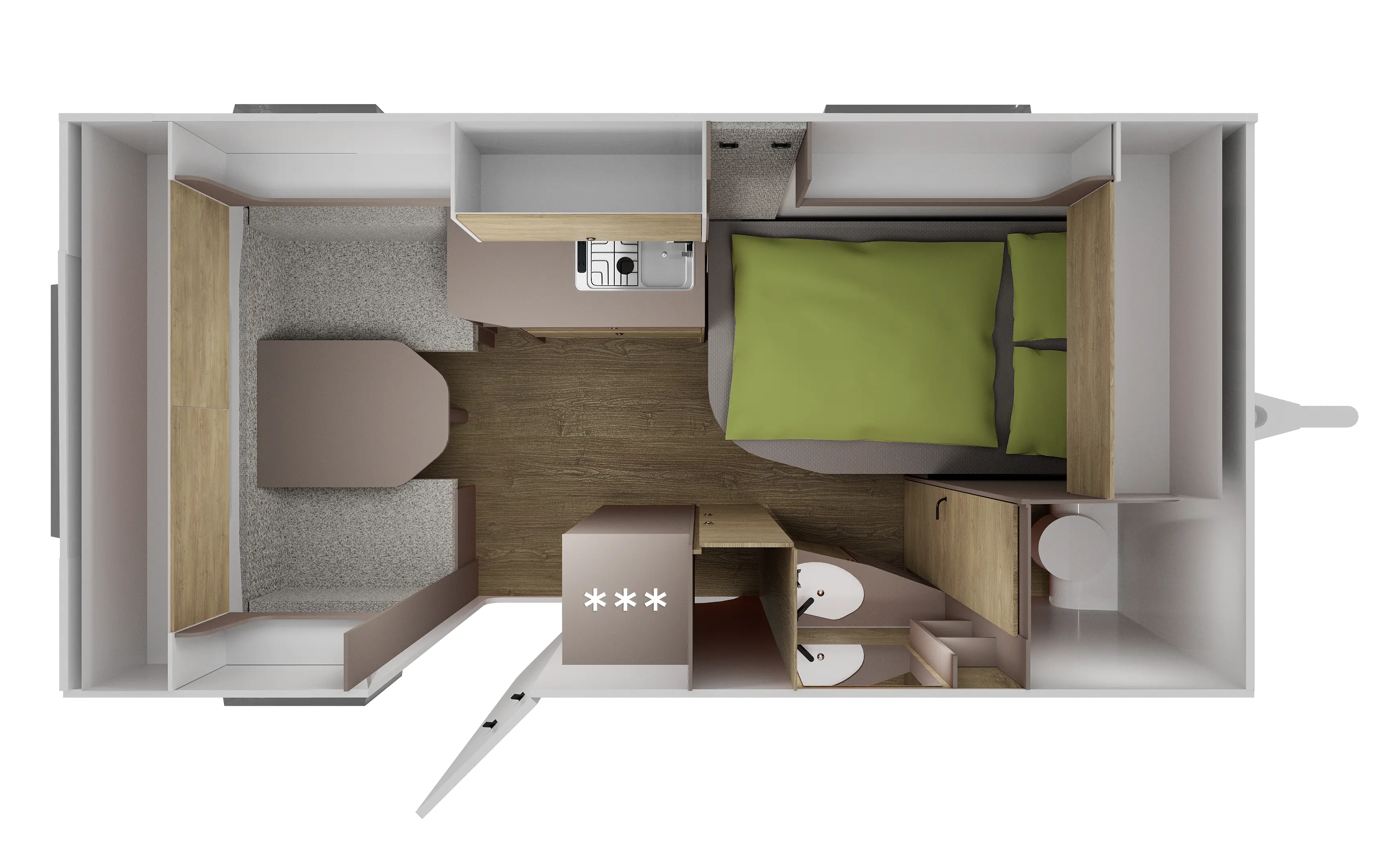
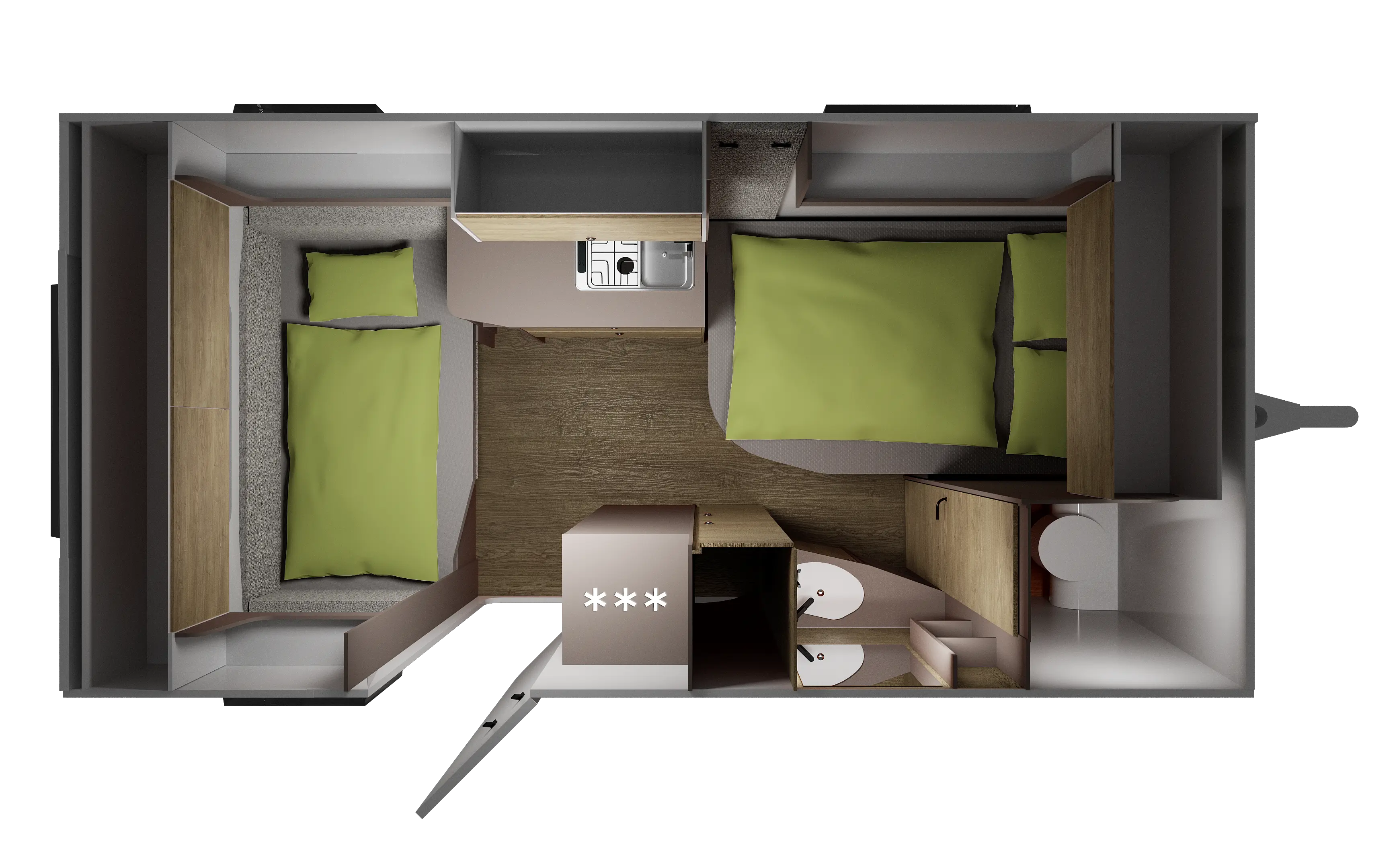
Floor plan
Ansicht wechseln
Thoughtfully designed down to the last detail
The benefits that really matter.
An overview of the interior and features.
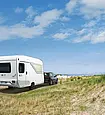
Lightweight & efficient
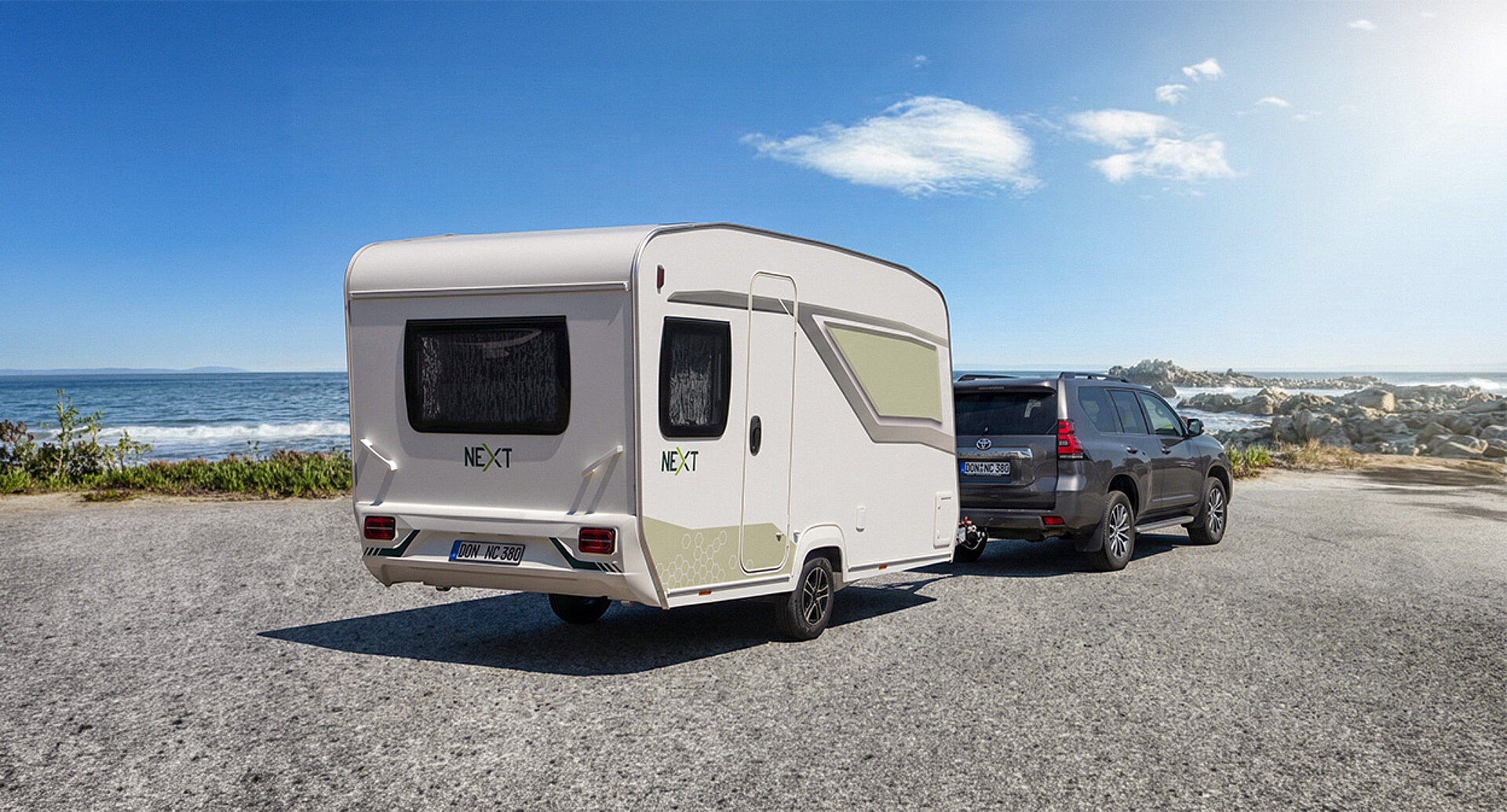
1,000 kg – also ideal for many electric cars.
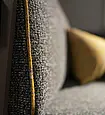
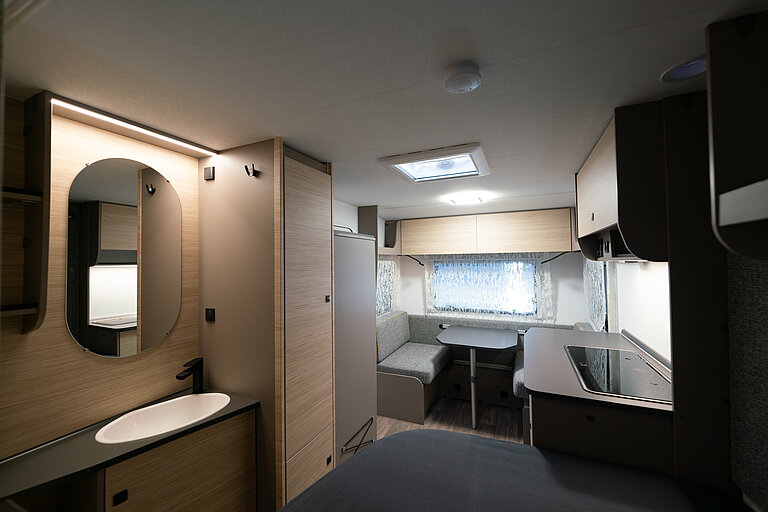
Modern interior
The NEXT 380 combines stylish design with maximum functionality.

On board
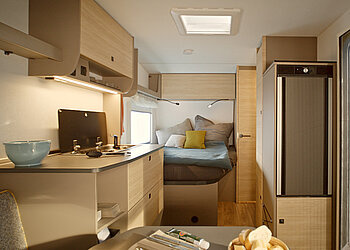
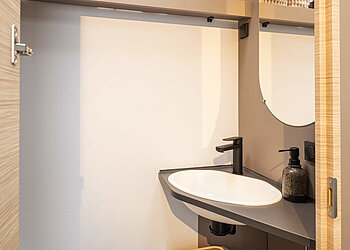
Kitchen, storage space and toilet. Everything you need.
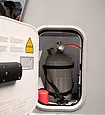
Gas cylinder compartment
Full power, no mains supply needed: your gas hob is ready to use straight away, wherever you are.

Ready to go in no time
Less hassle, more time for what matters to you.
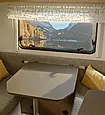
Relax and enjoy the view
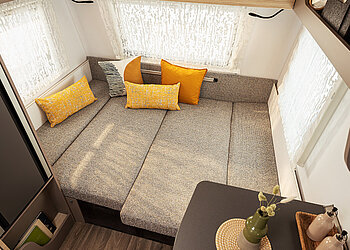
A seating area with a magnificent view during the day. A cosy bed in the evening.
Compact and self-sufficient.
Made for your adventures.
Your stylish base camp for your next outdoor adventure.
Your thousand-star hotel.
Make unspoilt nature your base camp and experience the true spirit of the outdoors.
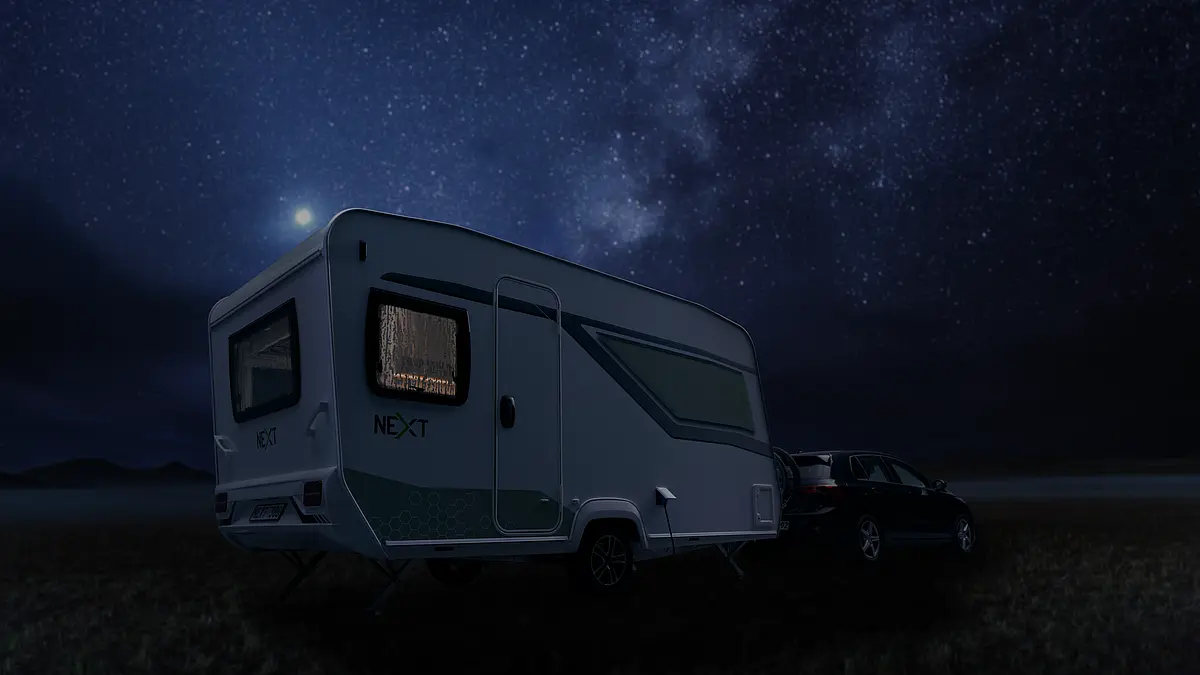
Leave it. Live it.
Once you’ve unhitched it, you’ve parked your stylish Basecamp safely and are ready to go straight away.

Camping starts right here.
Wild nature and the best food, right by the campfire.

Plenty of space for paws.
With NEXT, you and your furry friend can enjoy the easiest way to get out into nature.

Technical Specifications
For those who know exactly what they’re talking about.
Concise and well-organised — all the details on the NEXT 380.
- Dimensions: Length 588 cm
- Weight: under 1,000 kg
- Sleeps: 2 to 3 people
- Vehicle class: Compact, lightweight caravan (ideal for electric cars and smaller towing vehicles)
- Construction: Durable sandwich construction with smooth sheet metal for maximum stability and low weight
- Insulation: Smart insulation for a perfect, comfortable climate all year round
- Kitchen: Functional kitchen unit with hob, sink and cleverly designed storage space
- Sanitary facilities: Dedicated wash area with cassette toilet – for complete independence whilst on the move
- Chassis: Sturdy chassis for safe and durable handling
- Water supply: Fresh water tank with convenient external filling
- Heating & lighting: Integrated heating for cool nights and atmospheric, energy-saving LED lighting
- Living area: Cosy seating area (converts into a bed) with large panoramic windows
- Privacy: Practical blackout and fly-screen roller blinds to ensure your privacy
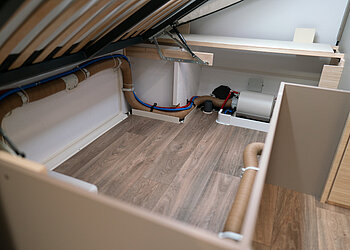
- Storage space: Well-designed cupboard system with deep pull-out drawers for your equipment